Contamination can trigger a process where people may throw out or abandon projects too easily, however some weird looking growths does not always mean contamination is present!
Contamination comes with a host of symptoms, some of which can mimic normal, potentially stressed, mycelial growth or normal discolouration!
Odd Growth
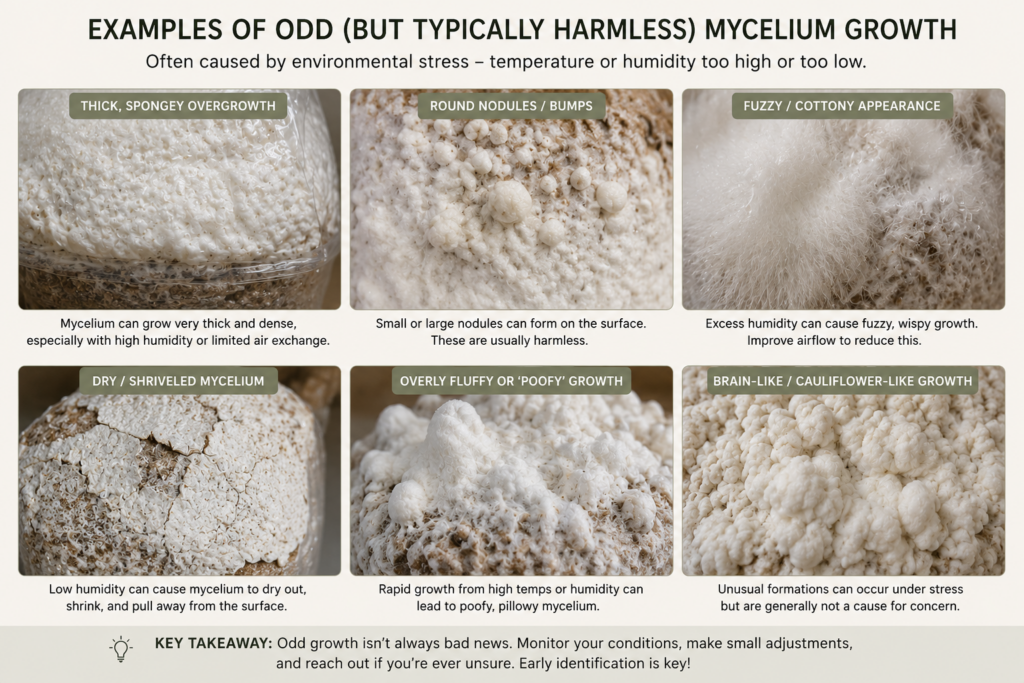
Odd growth may set off alarm bells, but can be completely harmless. A lot of the time, if the environmental temperatures or humidity are too high/low mycelium can throw out some odd growth patterns.
This is normal, however does mean the brick may be a little stressed. You can prevent any harmful abnormal growth by identifying it early and contacting us for support.
Odd growth can present in many ways, but what you tend to see is spongey, thick white growth which may come up in round nodules. This is typically normal, mycelial growth caused by external environmental conditions.
If you see this type of growth, your project is not contaminated but does need support to prevent this abnormal growth effecting fruiting yields or contributing to inactivity and potential contamination. Please contact us for support!
If you see this paired with discolouration, fuzzy off-white/grey growth with black heads, or “cobweb” type off-shoots this could be contamination. You can find our guide to contamination here. These types of contamination can be more prevalent in projects but are still relatively rare if all the appropriate precautions are taken.
Discolouration
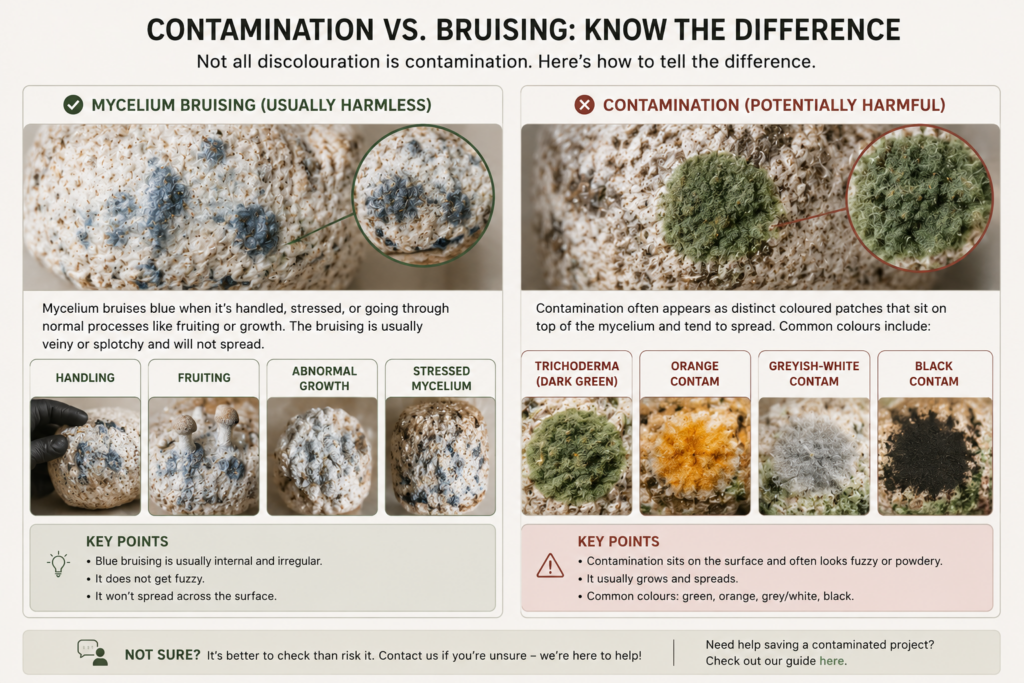
The most common contaminant, Trichoderma, will present as a dark blue/green colour on your project. However, mycelium also bruises blue! This can make it hard for beginners to notice the difference, so please contact us if you are unsure.
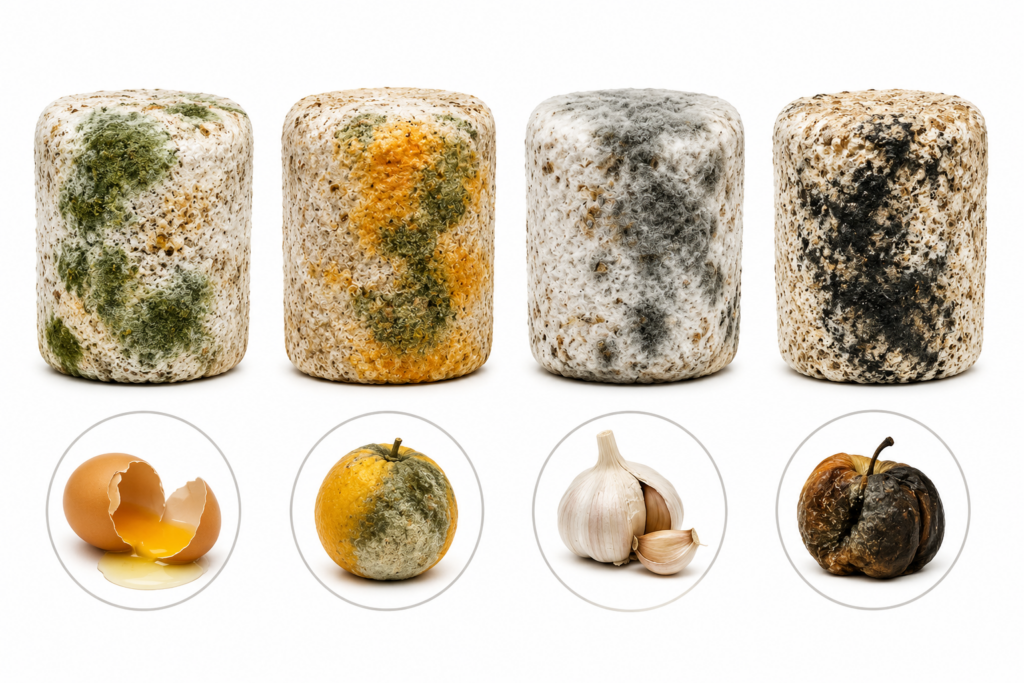
Random bruising can occur from handling the bag, fruiting, abnormal growth or stressed mycelium. Other contaminants can be a bright orange colour, greyish-white or even deep black. These types are often fatal to a project, which may need to be disposed of.
To make sure you aren’t disposing of a project prematurely, you can follow our guide on determining whether you can save a contaminated project, and how, here.
Smell
Your project should smell fresh, and for lack of a better word, “Mushroomy”.
A contaminated project will smell awful, and this is unlikely to be anything else than contamination.
Sulphuric, eggy smells or overly sweet, rotting smells can indicate contamination. At this point, it’s typically too late to try and save a project and can indicate a long-term problem with contamination.
By Contacting Us!
Contact us if you ever fear you have contamination and we can support you further! We can help identify and suggests ways to remove it (if safe) and precautions for next time.
Disclaimer
This information is intended for educational use only, for Gourmet Health Mushroom projects (i.e., Lions Mane, Turkey Tail, etc.). We do not condone or encourage the use of this information for other purposes.