Grain-to-Grain Transfers: Everything You Need to Know

Grain-to-Grain (G2G) transfers aren’t exclusive to advanced mycologists- beginners can do it too!

This process involves using fully colonised grain to inoculate fresh, sterile grain. This is commonly used by experienced mycologists as it can dramatically increase the amount of colonised grain from one singular project.

Transfers must involve a sterile environments, clean practices and some experience under your belt! If you’ve done a few kits already and feel confident to give this a go, we would recommend reading this beforehand. This is a higher-risk, higher-rewards method used to increase yields!

Benefits of Grain-to-Grain Transfers

There are several benefits of using G2G transfers which make them a more reliable and cost-effective way to inoculate several projects at once.

Faster Colonisation

Colonised grain will take over bags quicker than several spore syringes, or liquid cultures, could as it’s a pre-established nodule of healthy growth.

It acts as a branch for further nodules to spread from and establish further growth within your multiple bags.

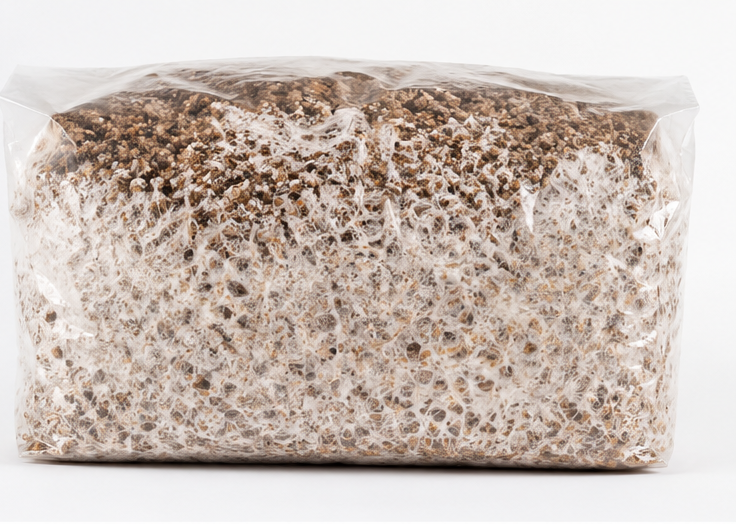
Bag with healthy, colonised mycelium.

Spores and liquid cultures take more time to develop nodules and branches, which can make it more susceptible to environmental contamination or environmental challenges delaying this process.

Colonised grain has already been through this process, and is stronger, faster and more capable to colonising bags in smaller amounts than other methods.

Expanding Healthy Cultures

G2G transfers can be incredibly useful for expanding on an already healthy and virulent culture of colonised mycelium.

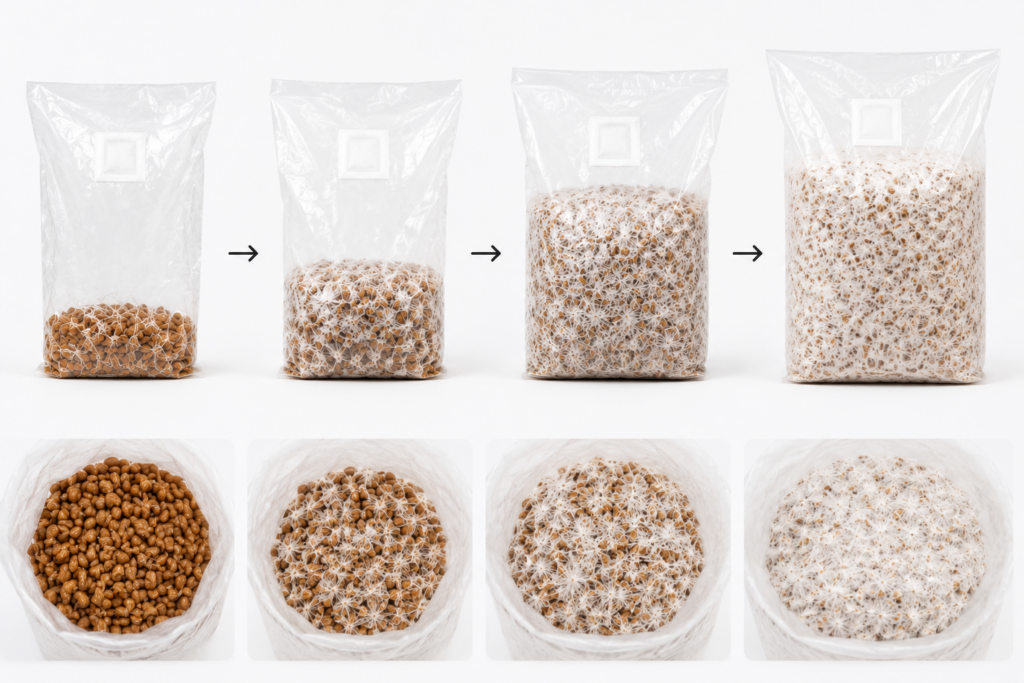
Expansion of mycelium due to a multi-stage G2G transfer.

If you notice incredible growth within your Gourmet Health Mushroom kit and have some spare, grain-filled bags/kits, you could take advantage of this and spread the love!

As you already know how this mycelium will behave, it will provide more consistent colonisation across a batch of projects leading to more reliable results.

More Cost-Effective

This method is largely more cost effective for establishing bigger/multiple projects as it uses one spore syringe or liquid culture as opposed to several.

As long as you keep your environment sterile, maintain clean practice and good environmental conditions, the risk of contamination will be minimal. Therefore, most projects you inoculate using a G2G transfer will colonise nicely. You can read our blog on minimising contamination here.

When Should You Use G2G Transfers?

You should only perform a G2G transfer if your starter mycelium is:

  • Fully colonized with white, healthy mycelium.
  • Healthy (no abnormal growth or discolouration).
  • Free from contamination.
  • Not overly old, over-grown or drying out.
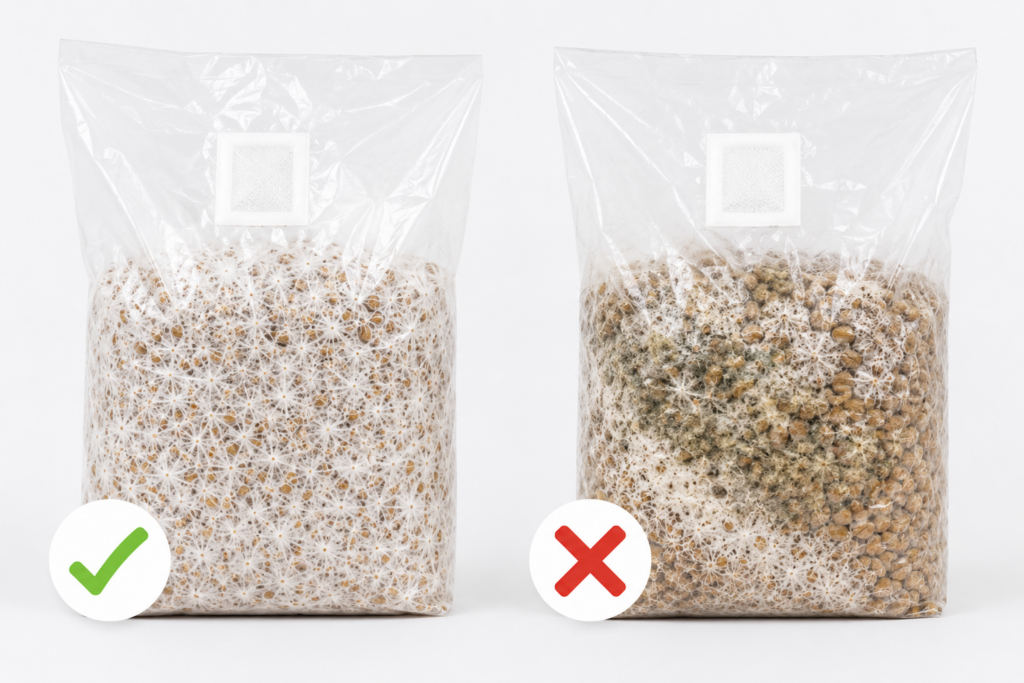
Left: Healthy, white bright mycelium. Right: Unhealthy, contaminated mycelium with uncolonized grain.

Attempting transfers from unhealthy grain will often just spread problems to other bags or projects. You should avoid doing this as it can be a waste of money, time and effort- not to mention disheartening.

Sterility is Important!

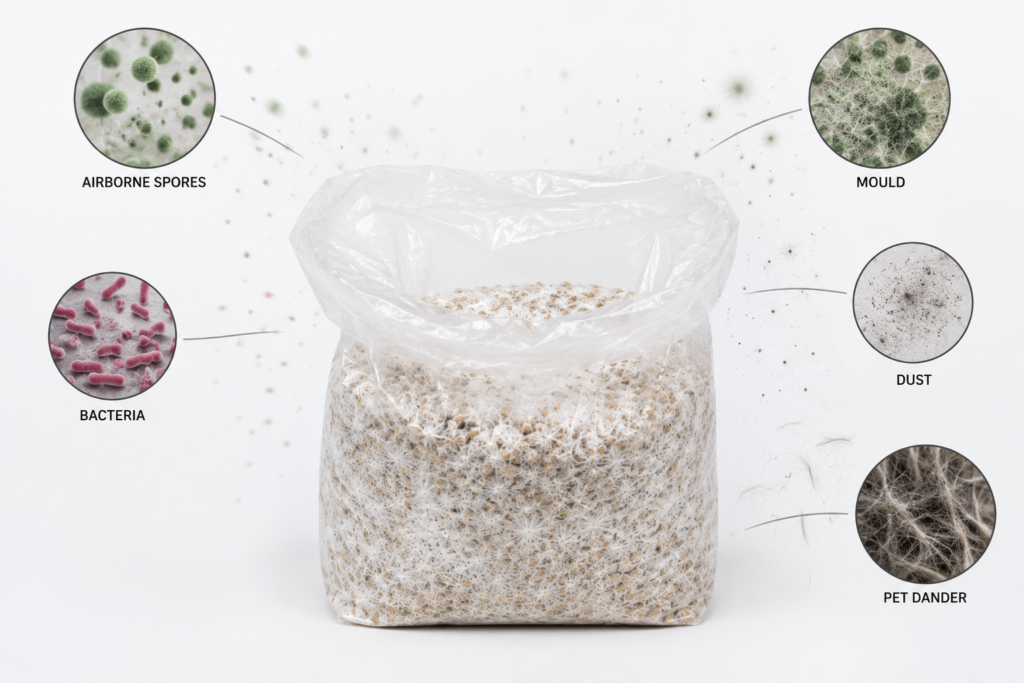
Once you open your fully colonized grain bag to proceed with a G2G transfer, the bag is no longer within a sterile environment and will be subjected to common household contaminants such as:

  • Airbourne Spores
  • Bacteria
  • Mould
  • Dust
  • Pet Dander

Even advanced mycologists will run into contamination occasionally. It is impossible to maintain a fully sterile environment within your own home. However, there are ways to minimise the risk!

An open bag of healthy, fully colonised mycelium. When opened, it can come into contact with household contaminants. This risk should be minimised!

Keep Your Environment Clean

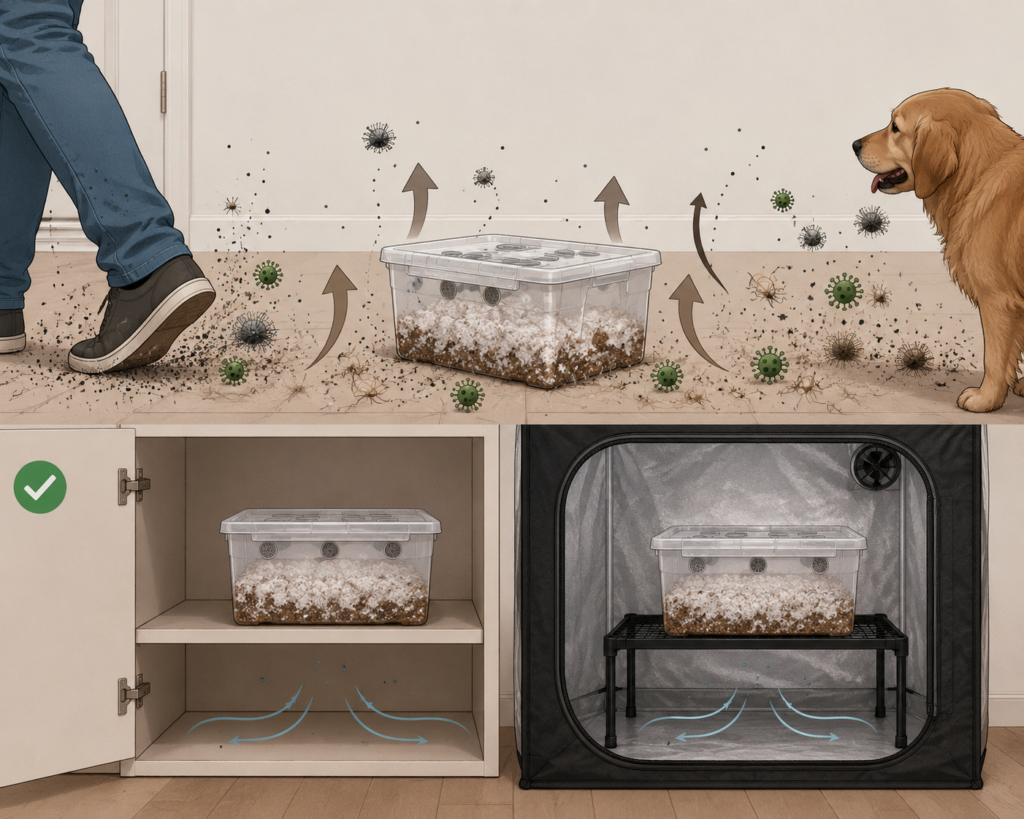
We would recommend that wherever you keep your project is in a low-traffic area you do not share with pets, biological waste (i.e., bathroom) or fumes (i.e., kitchen).

Common contaminants are everywhere!

These areas are much more likely to have common household contaminants within them.

To prevent environmental contaminants coming into contact with your project, you can keep them in a separate plastic container, or a fruiting tent. Keep them slightly raised up off of the floor (1-2ft) for best practice!

Keep Your Workspace and Equipment Clean

Whenever you decide to check out your projects and perform procedures, such as inoculation or G2G transfers, the area must be disinfected beforehand with 70% Isopropyl Alcohol. This includes any tent, fruiting chamber, or surface your projects will be coming into contact with.

Ensure you keep your projects out of this space until 30 minutes has passed after disinfecting the space. Mycelium hates alcohol just as much as contamination! This will prevent harming the results of your project.

You must wash your hands and/or wear gloves and disinfect your tools prior to performing a G2G transfer. You shouldn’t need a scalpel to perform this, as you can break up the colonised mycelium within the bag, before opening it. Whatever you use to open the bag with should be clean and disinfected!

Frequently Asked Questions

Are G2G Transfers Suitable For Beginners?

Yes! They aren’t reserved for advanced mycologists, however it is generally recommended you have a bit of experience with a few successful projects beforehand. This will support you in understanding what healthy mycelium should look like and how to provide a sterile, clean environment!

Can I Use Spores For G2G?

No. G2G transfers are designed to be used with healthy, colonised mycelium which is isolated and then transferred to different bags/projects.

Does G2G Colonise Faster?

Most of the time, yes! This is because live mycelium is already established. There are a few factors, like genetics and environmental conditions, which can impact colonisation rates. However, overall it is much faster!

Can Contamination Spread During G2G Transfers?

Yes! To prevent this, you need to ensure your grain donor is healthy and you use healthy techniques. You can find the signs of unhealthy mycelium here.

How Many Generations Can You Transfer?

Repeated transfers of the same grain can eventually lead to reduced momentum and exhaustion. You can use one bag to transfer to multiple other bags. However, after the first transfer we would not recommend additional transfers from these newly established projects. It’s best practice to return to a fresh bag periodically to keep the process efficient!

DISCLAIMER

This information is intended for educational purposes only, and to be applied in the growing of Gourmet Health Mushroom varieties such as Lions Mane, Oyster Mushrooms, etc. We do not recommend or encourage the growth of magic mushroom spore strains, which are sold for microscopy purposes only- to be viewed from under the microscope only. We strongly encourage you follow the law local to you.