

ABOUT THAI ELEPHANT DUNG MAGIC MUSHROOM SPORES UK – FOR MICROSCOPY AND RESEARCH
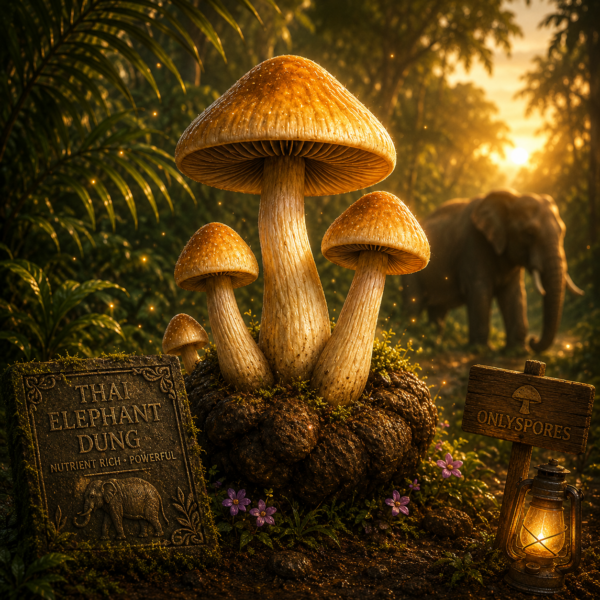
These rather strange sounding magic mushroom spores come from a strain of Psilocybe cubensis, which (as the name suggests) make their home in elephant dung found in Thailand. These psilocybin mushroom spores thrive in the lush tropical climate they originate from. This unique heritage makes it a fan favourite for mycologists new and old.
Under the microscope, Thai Elephant Dung magic mushroom spores tend to appear dark purple to black in colouration and oval in shape. They often are very rich in detail, which makes them ideal for taxonomy, microscopy, and educational research.
REPORTED PROPERTIES
In countries where cultivation is legal, Thai Elephant Dung mushrooms are reported to thrive in:
- Warm, tropical climates, ideally between 27-29c.
- Substrates resembling elephant dung do best, such as manure-based composts or BRF.
- High humidity environments with strong FAE for vigorous colonisation and healthy fruiting.
WHY CHOOSE THAI ELEPHANT DUNG SPORES?
Thai Elephant Dung magic mushroom spores are favoured for their exotic origin as well as their fast growth traits with clear microscopic structure. They offer unique insight into the adaptability of Psilocybe cubensis in tropical ecosystems. This makes them an excellent study for both beginners and experts alike.
If you’re seeking a tropical, heritage-rich psilocybin spore strain with fascinating properties from under the microscope, Thai Elephant Dung Spores would be a wonderful addition to your microscopy collection.
Buy quality, premium UK magic mushroom spores with OnlySpores today!
DISCLAIMER
These spores are sold strictly for microscopy, research, and educational purposes within the UK. Please note that the cultivation of Psilocybe cubensis mushrooms is illegal in the UK, and we strongly advise you to comply with all laws applicable in your region. We do not condone or encourage any unlawful use of these spores. All information provided is for educational purposes only and should not be interpreted as encouragement or instruction to cultivate mushrooms.